
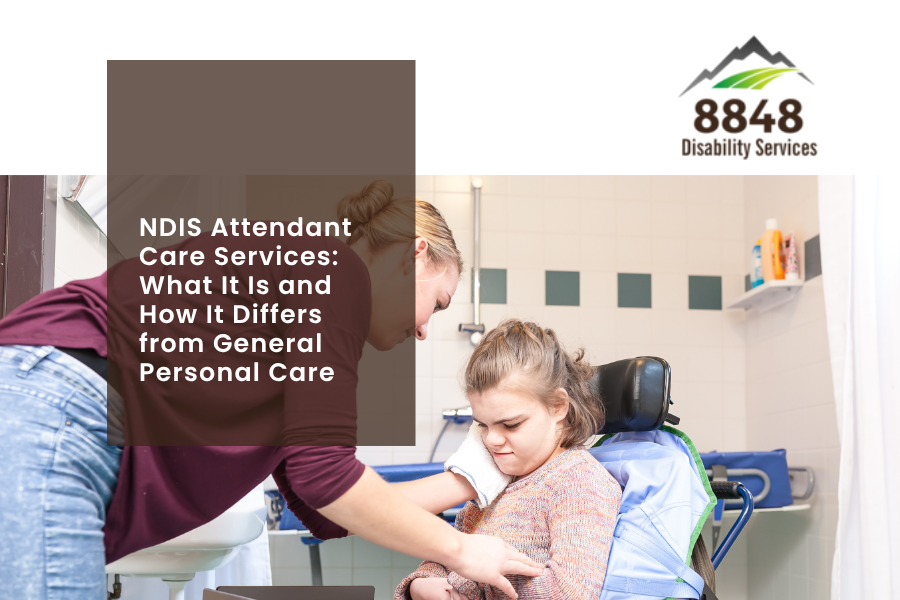
Dealing with the NDIS can be tricky, especially when you are trying to wrap your head around all the different terms. Between labels like “Core Supports”, “Assistance with Daily Life”, and “Personal Care”, it is completely understandable why so many participants and families find it hard to know exactly what is in their plan and who is supposed to be turning up at the door to help.
Two things people often mix up are general personal care and attendant care. Like, they both involve getting a helping hand around the house, but honestly, they are quite different. Booking the wrong type of support can throw a spanner in the works when it comes to your independence, safety, and your NDIS budget.
This guide kind of explains what NDIS attendant care in Australia means, how it differs from standard personal care, and how to get the right support for your everyday routine.
What is NDIS Attendant Care?
At its core, attendant care disability support means direct, hands-on help for people who need extra support to stay safe, healthy, and independent. Unlike basic home cleaning, an attendant care worker helps you with daily tasks so you can live as freely as possible in your own home or community.
This care is usually paid for under your NDIS Core Supports: Assistance with Daily Life budget. It is meant for people who need a high level of physical or thinking support throughout the day.
NDIS Attendant Care vs General Personal Care: The Main Differences
To most people, a personal attendant with disability worker and a personal care worker might look like they do the same job. However, the tasks they do, and their training are quite different.
1. The Scope of the Support
- General Personal Care: This focuses on basic daily needs. It includes things like reminding someone to take medicine, helping with basic grooming, and helping with standard showering routines.
- Attendant Care: This looks at your whole life and goals. A disability attendant care worker does more than just help with bathing. They actively support you to learn new skills, reach your goals, and get out into the community.
2. High Support vs Low Support Needs
- General Personal Care: Usually best for people who need low-to-moderate help. They might need a hand getting ready in the morning but can-do things on their own for the rest of the day.
- High Support Attendant NDIS: Built for people with complex or high-intensity needs. This involves workers with advanced training who know how to handle special physical transfers, complex medical routines, or major safety needs.
3. Skill and Training Levels
Standard personal care workers do a great job, but their training is for general everyday tasks. Attendant care workers who provide high-intensity support must follow strict NDIS rules. They are often trained by nurses to handle specific health and physical routines safely.
NDIS Attendant Care vs General Personal Care: The Main Differences
| Feature | General Personal Care | NDIS Attendant Care |
| Main Focus | Everyday hygiene, basic routines, and self-care. | Building skills, complex physical tasks, and community life. |
| Complexity Level | Low to medium physical support needs. | High-intensity, complex physical or health needs. |
| Task Examples | Brushing teeth, buttoning clothes, stepping into the shower. | Hoist transfers, complex bowel care, special mealtime help. |
| Goal Alignment | Keeping up day-to-day health and safety. | Reaching long-term independence and social inclusion. |
Understanding High-Intensity Attendant Care
When your funding moves into high support attendant NDIS items, the type of care changes a lot. High-intensity activities require workers who know how to manage health risks and follow detailed care plans.
These tasks must be done perfectly to keep you safe from health problems. If your plan includes high-intensity support, choosing an experienced provider across NDIS attendant care NSW QLD VIC or TAS ensures your workers have the exact skills needed to look after you.
How 8848 Disability Services Can Help
Whether you live in Sydney, Brisbane, Melbourne, or Hobart, getting reliable, kind, and professional care is very important. At 8848 Disability Services, we know that everyone has different needs.
We provide high-quality disability attendant care services across NSW, QLD, VIC, and TAS. We make sure your support workers are the right fit for your physical needs, personality, and life goals.
- The Right Match: We do not just send anyone. We match you with an attendant care worker who respects your privacy, your choices, and your home.
- High-Intensity Care: Our team is fully trained and meets all NDIS standards to give complex, high-support care safely.
- Multi-State Support: We offer reliable NDIS attendant care NSW QLD VIC and TAS, making it easy to keep your support if you move to a new state.
Frequently Asked Questions (FAQs)
What does a NDIS attendant care worker do day-to-day?
An attendant care worker provides hands-on help tailored to your needs. This can include assisting with difficult physical moves, managing special personal hygiene routines, supporting you to get out into the community, and helping you build confidence plus skills, so you can live safely every day.
How do I know if I need attendant care instead of general personal care?
If you only need minor reminders or light physical help with your morning routine, general personal care is usually enough. However, if your disability means you need special physical handling, hoists, complex health care, or constant safety checks, you will likely need attendant care.
Is attendant care funded under my NDIS Core Supports budget?
Yes, attendant care services are paid under the Core Supports budget, under “Assistance with Daily Life.” Because Core Supports funding is flexible, you can shift your hours around to suit your weekly schedules, social activities, and changing everyday routines.
Can an attendant care worker help me outside of my home?
Yes, absolutely. Attendant care is not just for inside the house. A support worker can go with you to university, work, social events, or medical appointments, providing the physical or safety support you need to enjoy and participate in your local community.
What training should a high-supported attendant care worker have?
Workers giving high-support care must pass NDIS worker screening checks and have special training. Depending on your needs, they must be trained by a registered nurse in areas like complex bowel care, PEG feeding tube use, or safe hoist lifting.
Does 8848 Disability Services operate across multiple Australian states?
Yes, we provide premium, fully compliant NDIS attendant care services across New South Wales, Queensland, Victoria, and Tasmania. Our large network means we can provide consistent support, reliable backup staff, and excellent service for participants across eastern Australia.
Ready to Live More Independently?
You deserve a NDIS partner who truly understands how to help you thrive. Do not leave your daily independence to guess work or basic care routines.
Get in touch with the friendly team at 8848 Disability Services today. Let us help you set up an attendant care plan that respects your choices, protects your dignity, and empowers you to reach your goals.
Contact 8848 Disability Services Today