
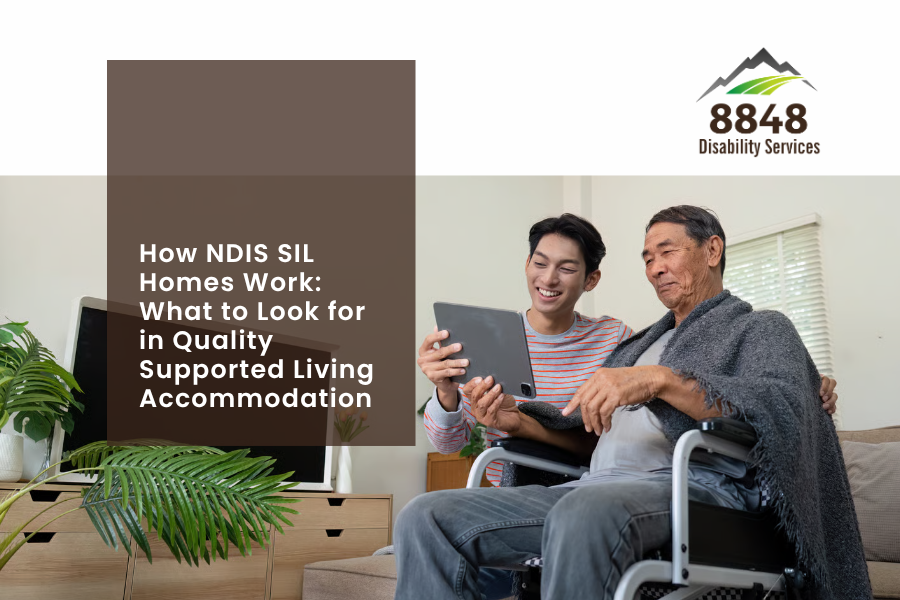
Finding a safe place to live with the right daily support can change your life. Under the National Disability Insurance Scheme (NDIS), Supported Independent Living (SIL) helps people with disability live on their own terms. It gives you a place to call home with workers there to help you when you need it.
But looking for NDIS SIL homes Australia wide can feel hard. There are many things to learn about funding, looking at open houses, and finding a service provider you can trust.
This guide explains how supported independent living homes work in plain English. We show you what makes a great home and how to choose the best option for your future.
What Is NDIS Supported Independent Living (SIL)?
Supported Independent Living is a NDIS service that helps you live as independently as possible. It pays for support workers to help you with everyday tasks, usually in a shared home with other people.
It is important to know that the house and the support are two different things. SIL funding pays for the people who help you. It does not pay for your rent, the land, or the building.
When you move into NDIS shared accommodation, you live with housemates. You share common areas like the kitchen and living room, and you share the support staff. This helps your funding go further and gives you a chance to make new friends.
How SIL Homes Help You Build Independence
Some people think that moving into supported independent living homes means losing your freedom. This is not true. A good provider will help you get more control over your life.
The main goal of SIL is to help you learn how to do things yourself. Staff do not just do all the work for you. They work with you so you can build your confidence. Over time, you will learn to do things that your family used to do for you.
- Money Skills: Learning how to budget your money, count change, and pay for your daily items.
- Cooking and Health: Choosing healthy foods, shopping for groceries, and learning how to cook safely.
- Getting Around: Learning how to use buses or trains, joining local social clubs, and seeing friends.
By focusing on what you can do, quality SIL properties help you grow and live a bigger life.
What to Look for in Quality SIL Properties
Not all houses are the same. When you look at open SIL vacancies Australia wide, you need to check the building and meet the staff.
Here are the most important things a good house must have:
1. Safety and Easy Access
The house must fit your physical needs. Look for wide hallways, flat entryways with no steps, and bathrooms that are easy to use. The house must also have clear safety plans and fire alarms so you can get out quickly in an emergency.
2. Private Space
Living with others is fun, but everyone needs quiet time. A good home gives you your own big bedroom. It should also have enough bathrooms and quiet spaces where you can relax alone when you want to.
3. Good Housemates
A beautiful house is not fun if you do not get along with the people inside. Good providers spend time matching housemates. They look at your age, what you like to do, how you talk, and what makes you feel comfortable before suggesting a home.
Finding a Provider and Checking Vacancies
To get a spot in a SIL home, you need to work with your Support Coordinator and registered NDIS providers. The NDIS needs to see clear paperwork about your disability and the help you need before they approve your funding.
Understanding the Roster of Care (RoC)
To get your SIL money, your provider creates a form called a Roster of Care. This form maps out every hour of the week. It shows the NDIS exactly when you need help alone, when you can share help, and when you need staff at night. A provider with plenty of experience will make sure this form is correct, so you do not run out of funds.
Choosing the Right Provider
When looking at open homes, ask how providers train their staff and run their houses. Providers like 8848 Disability Services focus entirely on what you want out of life. Their name comes from Mount Everest, which is 8848 metres high. Their goal is to help you climb over daily challenges to reach your personal goals. They make sure your home is a place where you always feel safe, heard, and respected.
To give you the best care, they have local teams across New South Wales and Tasmania, including Parramatta, Campbelltown, and Liverpool. As a registered NDIS provider, they follow all safety laws, and every worker is fully screened and trained before entering your home. They offer a free consultation to sit down with you and your family to make a flexible plan that fits your life perfectly.
5 Simple Steps to Move Into a SIL Home
Moving to a new home is a big step. Breaking it down into steps makes the move much easier.
Step 1: Check Your NDIS Plan
Look at your current plan. Make sure you have a goal about living independently or changing your home setup.
Step 2: Get Your Reports Ready
Gather files from your occupational therapist (OT) or doctors. These reports tell the NDIS exactly what help you need every day.
Step 3: Look for Open Rooms
Search for houses in areas you like. Ask about the other people living there and who the staff are.
Step 4: Visit the House
When considering making a purchase, see the home first. Eat with the tenants or stay for a weekend to experience yourself.
Step 5: Sign the Agreement
Read the agreement document. Be sure to determine the costs of food, rent, and the operation of the care, and what amoutn of money you will need.
Why Choose 8848 Disability Services?
It’s a major decision to pick a team to assist you every day. Person-centred and respectful care provided by 8848 Disability Services is friendly and dependable. They’re dedicated to providing you with just what you need in order to live a happy, independent life.
They are trusted by families because:
- Registered and Safe: They are compliant with all safety regulations and all personnel undergo stringent background checks prior to working with you.
- Proven Support: They have a long history of supporting people to select appropriate housing and daily care in New South Wales, Queensland, Victoria and Tasmania.
- Highly Trained Staff: Their staff are trained 24 hours per day to support. They are trained regularly to ensure they are able to support cooking, cleaning and complex care.
- Great Housemate Matching: They take the time to get to know you and your interests. This is to ensure that they can find housemates with similar interests to better facilitate the smoothness of interaction between the house mates.
- Free Consultations: They consult you and your family for free to understand your objectives and develop a support plan just for you.
They listen to you and create a flexible care plan that works with your daily schedule. The team will work closely with you, your family, and your coordinators so your transition to a new home is clear, easy, and exciting for your future.
Frequently Asked Questions
What is the difference between SIL and SDA?
SIL pays for the support workers who come into the home to help you cook, clean, and shower. SDA (Specialist Disability Accommodation) is the money for the physical house itself if you need a specialized building with ramps or ceiling hoists.
Can I pick my own workers in a shared SIL home?
In a shared house, the provider hires the main staff to make sure someone is always there 24/7. But good providers listen to you. They try to hire workers who share their interests and fit in well with the house.
How do I pay for my rent and food in a SIL home?
Your SIL funding cannot be used for food, bills, or rent. Most people use their Disability Support Pension (DSP) to pay a weekly fee to the house. This fee covers your rent, your groceries, electricity, and the internet.
What happens if I need more help later?
If your needs change, your provider can help you get new letters from your doctor. You can send these to the NDIS to ask for a plan to change so you can get more funding for extra staff support.
Can I live in a SIL house all by myself?
Most people share a SIL house because it keeps costs down. But if you have very high health needs or behavioral needs that mean you cannot live with others, the NDIS may give you funding to live in a house alone.
How does a provider choose my housemates?
Providers look at things like your age, the things you like to do, and when you sleep or wake up. They arrange short visits and lunches so you can meet the other residents before you make a final decision to move in.
What if I move in and I am not happy?
You always have choice and control over your life. If you have a problem, tell your provider so they can fix it. If you are still unhappy, you can work with your Support Coordinator to pack up and find a new home.
Ready to Find Your New Home?
The best home is one that keeps you safe but also helps you grow. If you or a family member is looking for supported living options in New South Wales, Queensland, Victoria, or Tasmania, the team at 8848 Disability Services is here to assist.
Call our friendly team today at 1300 753 718 or look at our website to see our open rooms. Take your first step toward independent living today.